Physical Address
8206 Louisiana Blvd NE, Suite A N03815
Albuquerque, NM 87113
United States
Physical Address
8206 Louisiana Blvd NE, Suite A N03815
Albuquerque, NM 87113
United States

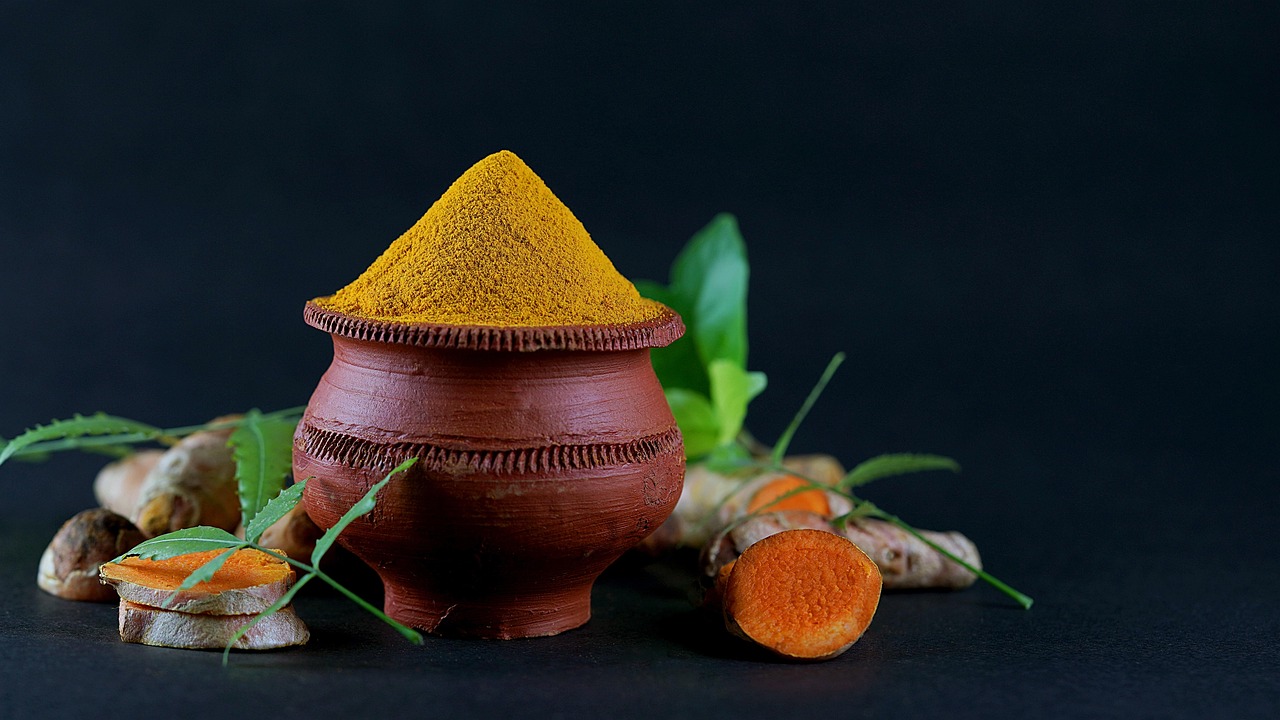
You've probably heard about turmeric by now—maybe from Instagram, maybe from your doctor, maybe from that friend who swears it cured their joint pain. It's everywhere, which makes it easy to dismiss as another supplement trend. But here's the thing: curcumin, the active compound in turmeric, is one of the few natural anti-inflammatories with serious research backing it up. I'm going to walk you through what it actually does, why it works for some people and not others, and how to take it if you're going to bother at all. Because the difference between turmeric that helps and turmeric that does nothing often comes down to details most articles skip over.
You’ve probably heard about turmeric by now. Maybe from a wellness Instagram account, maybe from your doctor, maybe from that friend who swears it cured their joint pain. It’s everywhere, and that ubiquity makes it easy to dismiss as just another supplement trend.
But here’s the thing: turmeric—or more specifically, its active compound curcumin—is one of the few natural anti-inflammatories that actually has serious research backing it up. Not perfect research, not conclusive for every application, but substantial enough that I pay attention.
I’m going to walk you through what turmeric actually does, why it works for some people and not others, and most importantly, how to take it if you’re going to bother at all. Because the difference between turmeric that helps and turmeric that does nothing often comes down to details most articles skip over.
This isn’t going to be a sales pitch. If turmeric isn’t right for your situation, I’ll tell you. But if you’re dealing with inflammatory joint pain and you haven’t tried a proper curcumin supplement yet, you might be missing something genuinely useful.

Before we talk about turmeric specifically, let’s make sure we’re on the same page about inflammation.
Acute inflammation is your friend. You twist your ankle, it swells up, your immune system floods the area with healing compounds, and over a few days or weeks, things get better. That’s inflammation working exactly as intended.
Chronic inflammation is different. It’s low-grade, persistent, and destructive. It breaks down cartilage, damages joint tissue, and creates a feedback loop where inflammation causes damage that causes more inflammation. This is what happens in conditions like rheumatoid arthritis and osteoarthritis, and it’s a huge driver of joint pain and degeneration.
Most conventional anti-inflammatory medications—NSAIDs like ibuprofen or naproxen—work by blocking specific enzymes (COX-1 and COX-2) that produce inflammatory compounds. They’re effective, but long-term use comes with real risks: stomach ulcers, kidney problems, cardiovascular issues.
This is where turmeric becomes interesting. It works differently, through multiple pathways, and has a safety profile that’s dramatically better. Not risk-free—nothing is—but the side effects are generally mild and rare.
The question isn’t whether inflammation is bad or whether we should try to control it. The question is what tools work best for that job with the fewest downsides.
Turmeric is the spice. Curcumin is the active compound inside it that does most of the heavy lifting.
When you consume curcumin, it interferes with inflammatory processes at multiple points. It inhibits NF-kB, a protein complex that acts like a master switch for inflammation. It suppresses COX-2 and 5-LOX enzymes, similar to NSAIDs but through different mechanisms. It reduces the production of inflammatory cytokines—signaling molecules that perpetuate inflammation.

Beyond that, curcumin has antioxidant properties. It neutralizes free radicals and boosts your body’s own antioxidant enzymes, which helps protect joint tissues from oxidative damage.
The research on this is actually quite solid. Studies have shown that curcumin can reduce pain and improve function in people with osteoarthritis, sometimes matching the effectiveness of conventional pain medications. One trial compared curcumin to diclofenac (a strong NSAID) in patients with rheumatoid arthritis and found comparable improvements in pain and swelling, with fewer gastrointestinal side effects in the curcumin group.
That doesn’t mean curcumin is a miracle cure. It means it’s a legitimate tool with real anti-inflammatory effects that work through well-understood mechanisms. For some people, it makes a meaningful difference. For others, less so.
The variability comes down to factors we’ll get into—absorption, dosage, individual response, and the specific nature of your joint problem.
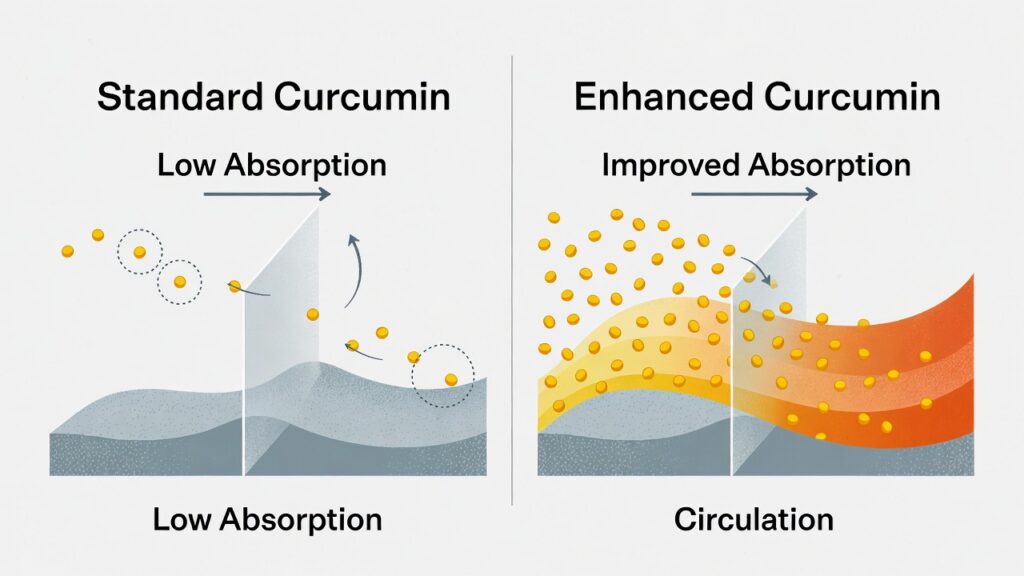
Here’s where most turmeric supplements fail, and why drinking turmeric tea or adding curry powder to your food probably isn’t doing much therapeutically.
Curcumin has terrible bioavailability. Your digestive system doesn’t absorb it well, and what little does get absorbed is rapidly metabolized and eliminated. Studies show that even large doses of standard curcumin result in barely detectable levels in your bloodstream.
This is a huge problem because if curcumin isn’t getting into your system, it can’t do anything for your joints.
The supplement industry has developed several strategies to address this, and understanding them is critical if you’re going to spend money on turmeric.
Curcumin with piperine (black pepper extract): Piperine inhibits certain liver enzymes that break down curcumin, dramatically increasing blood levels—some studies show up to 2,000% improvement. This is probably the most common and cost-effective enhancement method. Products will usually list “BioPerine” or something similar on the label.
Liposomal curcumin: Curcumin molecules are encapsulated in fat bubbles (liposomes) that protect them during digestion and help them pass through intestinal walls. This works, but products vary in quality.
Curcumin phytosome (Meriva): Curcumin is bound to phospholipids, which improves absorption and has solid clinical research supporting its effectiveness. This is one of the better-studied enhanced forms.
Nanoparticle or micronized curcumin: The curcumin particles are made extremely small to increase surface area and absorption. Various proprietary formulations exist (like CurcuWIN or Longvida), each with their own research.
Do these enhancements actually matter? Yes, significantly. A study comparing standard curcumin to enhanced forms found that bioavailability could be 5 to 45 times higher depending on the formulation. That’s not marginal—it’s the difference between a supplement that might work and one that almost certainly won’t.
My take: if you’re going to try curcumin, don’t buy the cheapest turmeric powder in bulk. Get a quality supplement with proven absorption enhancement. It costs more, but taking something that doesn’t absorb is just expensive urine.
Most clinical studies showing benefits for joint pain use curcumin doses between 500 mg and 2,000 mg daily, typically split into two or three doses.
For standard curcumin with piperine, I’d start around 500 mg twice daily. For enhanced absorption forms like phytosome or specialized formulations, the effective dose might be lower—follow the product recommendations, which are usually based on bioavailability studies.
Take it with food, preferably something with a bit of fat, since curcumin is fat-soluble. This improves absorption even with enhanced formulations.
Now, about expectations. Curcumin is not a fast-acting pain medication. You’re not going to take it and feel better an hour later. The anti-inflammatory effects build over time.
Most people who respond well start noticing improvements somewhere between two and eight weeks. Some sooner, some later. If you’ve tried it for two weeks and given up because nothing changed, you didn’t give it a fair shot.
On the flip side, if you’ve been taking it consistently for three months at proper doses and you feel zero difference, it’s probably not for you. That happens. Individual responses to supplements vary, and curcumin isn’t universally effective.
The other thing to understand: curcumin is better at managing inflammatory pain than mechanical pain. If your joint pain is primarily from bone rubbing on bone because cartilage is gone, curcumin might help with the inflammatory component but won’t fix the structural issue. If your pain is driven by active inflammation—hot, swollen joints, morning stiffness—you’re more likely to see meaningful benefits.
Based on the research and what I’ve observed, curcumin seems to help most with:
Osteoarthritis with an inflammatory component. Not everyone with osteoarthritis has significant inflammation, but many do. If your joints get warm, if you have morning stiffness that improves with movement, if NSAIDs help you a lot, there’s probably inflammation involved and curcumin might help.
Rheumatoid arthritis and other inflammatory arthritis conditions. Curcumin won’t replace disease-modifying medications, but it can be a useful adjunct for managing symptoms. Some people are able to reduce their NSAID use when adding curcumin, which is valuable if you’re trying to minimize medication side effects.
Post-exercise inflammation. Athletes and active people dealing with joint inflammation from training sometimes find curcumin helps with recovery. It’s not going to heal an injury, but it might reduce the inflammatory response that makes you sore and stiff.
General inflammatory conditions. If you have multiple sources of inflammation—maybe arthritis plus other inflammatory issues—curcumin’s systemic anti-inflammatory effects can be helpful broadly.
Who probably won’t benefit much: people with purely mechanical joint problems, people with very mild arthritis who aren’t actually experiencing significant inflammation, and people who expect dramatic overnight changes.
The supplement industry is poorly regulated, and turmeric/curcumin products vary wildly in quality.
Independent testing has found that many products don’t contain the amount of curcumin claimed on the label. Some contain almost none. Others are contaminated with lead or other heavy metals, particularly products sourced from regions with poor quality control.
Look for third-party testing. USP, NSF International, or ConsumerLab certification means the product has been independently verified. It’s not a guarantee of effectiveness, but it’s a guarantee that what’s on the label is actually in the bottle.
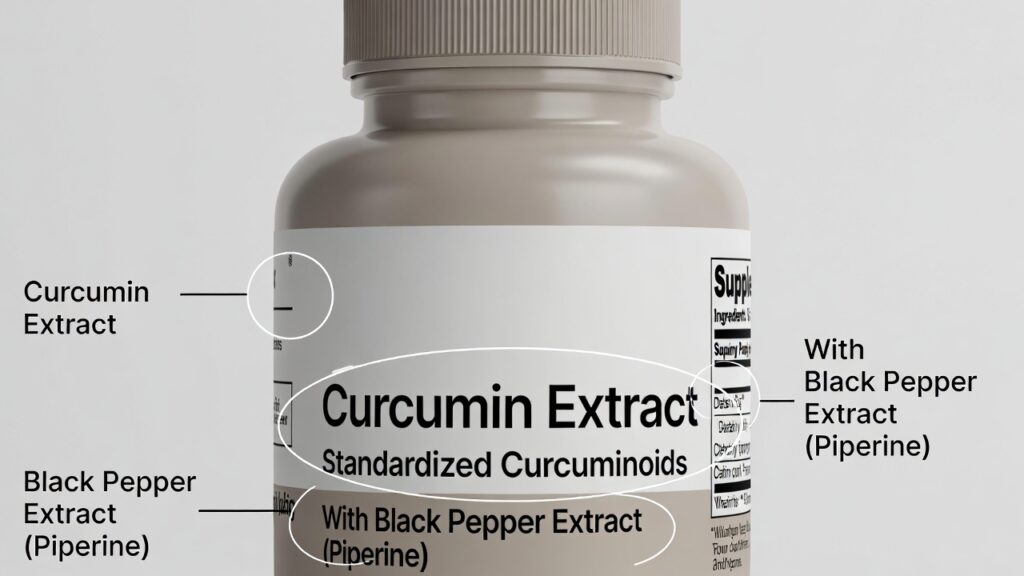
Pay attention to the form of curcumin. If the label just says “turmeric root powder,” you’re getting very little active curcumin and terrible absorption. Look for “curcumin extract” or “curcuminoids,” ideally standardized to a certain percentage (95% is common for extracts).
And check what absorption enhancement is being used. “With black pepper extract” or “with BioPerine” is a good start. Proprietary forms like Meriva, Longvida, or CurcuWIN have their own research supporting bioavailability.
Brand matters less than these specifics, but certain manufacturers have better reputations for quality. Do fifteen minutes of research before buying. Read actual reviews, not marketing material. Check if there’s independent testing data available.
Cheap turmeric supplements are usually cheap for a reason. You’re either getting poor-quality curcumin, terrible absorption, or both. Spending $15 on something that doesn’t work isn’t saving money compared to spending $30 on something that does.
Curcumin is generally very safe, which is one of its major selling points compared to long-term NSAID use.
Some people get mild digestive upset—nausea, diarrhea, or stomach discomfort. Usually temporary and often resolved by taking it with food or reducing the dose. But if it persists, curcumin might not be for you.
There are some interactions to be aware of. Curcumin has mild blood-thinning properties. If you’re on warfarin, aspirin, or other anticoagulants, talk to your doctor before adding curcumin. The risk probably isn’t huge, but it’s real enough to mention.
It might also interact with certain diabetes medications by affecting blood sugar. Again, probably not a major issue, but worth monitoring if you’re diabetic and starting curcumin.
Curcumin can affect the way your body metabolizes certain drugs by influencing liver enzymes. If you’re on medications with narrow therapeutic windows, check with your pharmacist or doctor about potential interactions.
Pregnant or breastfeeding? The safety data isn’t robust enough to recommend it, so I’d avoid it or at least discuss it with your healthcare provider.
High doses—like multiple grams per day—can potentially cause more significant side effects, though even then, curcumin is remarkably well-tolerated compared to most medications. But there’s no reason to megadose. Stick to studied doses, usually in the 1,000-2,000 mg range for curcumin extract.
Curcumin isn’t a standalone solution, and it probably shouldn’t be.
If you’re dealing with joint pain, you’re likely already thinking about exercise, weight management, physical therapy, maybe other supplements. Good. Keep doing those things.
Exercise, particularly strength training and low-impact movement, is still more important than any supplement. Curcumin might reduce inflammation, but strong muscles stabilize joints and reduce stress on them. You need both.
Weight management matters if it’s relevant to your situation. Extra weight puts multiples of pressure on your joints with every step. Losing even modest amounts can dramatically reduce pain. Curcumin can’t compete with that.
Some people combine curcumin with other joint supplements—glucosamine, omega-3s, collagen. There’s some logic to this since they work through different mechanisms. I’m not opposed to it, but start with one thing at a time so you know what’s actually helping. If you start three supplements simultaneously and feel better, you have no idea which one worked.
If you’re on prescription anti-inflammatories or pain medications, talk to your doctor before adding curcumin. Not because it’s dangerous, but because it might allow you to reduce those medications over time if it works well. That’s worth coordinating rather than doing on your own.
Curcumin may help manage inflammation, but long-term joint health still depends on movement—especially targeted knee exercises that strengthen the muscles supporting the joint.

Here’s something most supplement articles won’t tell you: no supplement is going to overcome a lifestyle that promotes chronic inflammation.
If you’re taking curcumin but eating a diet heavy in processed foods, refined sugars, and omega-6 vegetable oils, you’re fighting an uphill battle. If you’re chronically sleep-deprived, stressed, sedentary, or overweight, inflammation is going to be elevated regardless of what supplements you take.
Curcumin can help manage inflammation, but it works better when it’s not trying to compensate for everything else.
An anti-inflammatory diet—more whole foods, more omega-3s from fish, more vegetables, less processed junk—will do more for inflammation than any supplement. Regular movement, adequate sleep, stress management, maintaining a healthy weight—these are foundational.
I’m not saying you need to be perfect. Nobody is. But if your lifestyle is actively inflammatory and you’re expecting curcumin to fix everything, you’re going to be disappointed.
Think of curcumin as one tool in a comprehensive approach, not a magic bullet that lets you ignore everything else.
Supplements like curcumin work best when they’re part of a bigger picture that includes movement, strength training, and long-term strategies for active aging after 50.
After looking at the research and paying attention to real-world results, here’s where I land:
Curcumin is worth trying if you have inflammatory joint pain and you’re looking for a natural option with a good safety profile. It’s not going to work for everyone, but it works well enough for enough people that the odds are reasonable.
Get a quality product with proven absorption enhancement. Take it consistently for at least 6-8 weeks before deciding if it’s helping. Pay attention to subtle improvements—maybe pain is down 20-30%, maybe morning stiffness is less, maybe you can move more easily. Those are meaningful even if they’re not dramatic.
If it works for you, there’s no reason not to continue long-term. If it doesn’t, move on without overthinking it. You gave it a fair shot, it wasn’t for you, that’s fine.
Don’t expect miracles. Don’t expect overnight changes. Do expect that if inflammation is a significant driver of your joint pain, curcumin might help manage it more safely than long-term NSAID use.
And please, spend the money on a quality product. Cheap turmeric supplements with poor absorption are throwing money away. Better to spend $30 on something that might work than $10 on something that almost certainly won’t.
If you decide to try curcumin, here’s what I’d actually do:
Pick a quality curcumin supplement with proven absorption enhancement. Look for third-party testing. Start with 500-1,000 mg daily, split into two doses, taken with meals.
Give it eight weeks. Mark your calendar. Track your symptoms—pain levels, stiffness, function. Be honest with yourself about whether things are improving.
If you’re noticing benefits but they’re not quite enough, consider increasing to the higher end of the dose range—1,500-2,000 mg daily—before giving up.
If after eight weeks you genuinely feel no different, it’s probably not for you. Stop taking it and try something else. Maybe omega-3s, maybe a different anti-inflammatory approach, maybe focusing more on the lifestyle and exercise side of things.
If it’s helping, keep going. You can take curcumin indefinitely based on current safety data. Just continue monitoring how you feel and whether the benefits persist.
And remember: curcumin is part of a strategy, not the entire strategy. The people who get the best results are the ones who combine it with appropriate exercise, good nutrition, weight management if needed, and other evidence-based approaches to joint health.
Your joints deserve a comprehensive plan. Curcumin can be a useful piece of that plan, but it’s just one piece.
Note: This is information based on research and experience, not medical advice. If you have medical conditions, take medications, or have concerns about supplements, consult with a healthcare provider. They can assess your specific situation and provide personalized guidance.