Physical Address
8206 Louisiana Blvd NE, Suite A N03815
Albuquerque, NM 87113
United States
Physical Address
8206 Louisiana Blvd NE, Suite A N03815
Albuquerque, NM 87113
United States

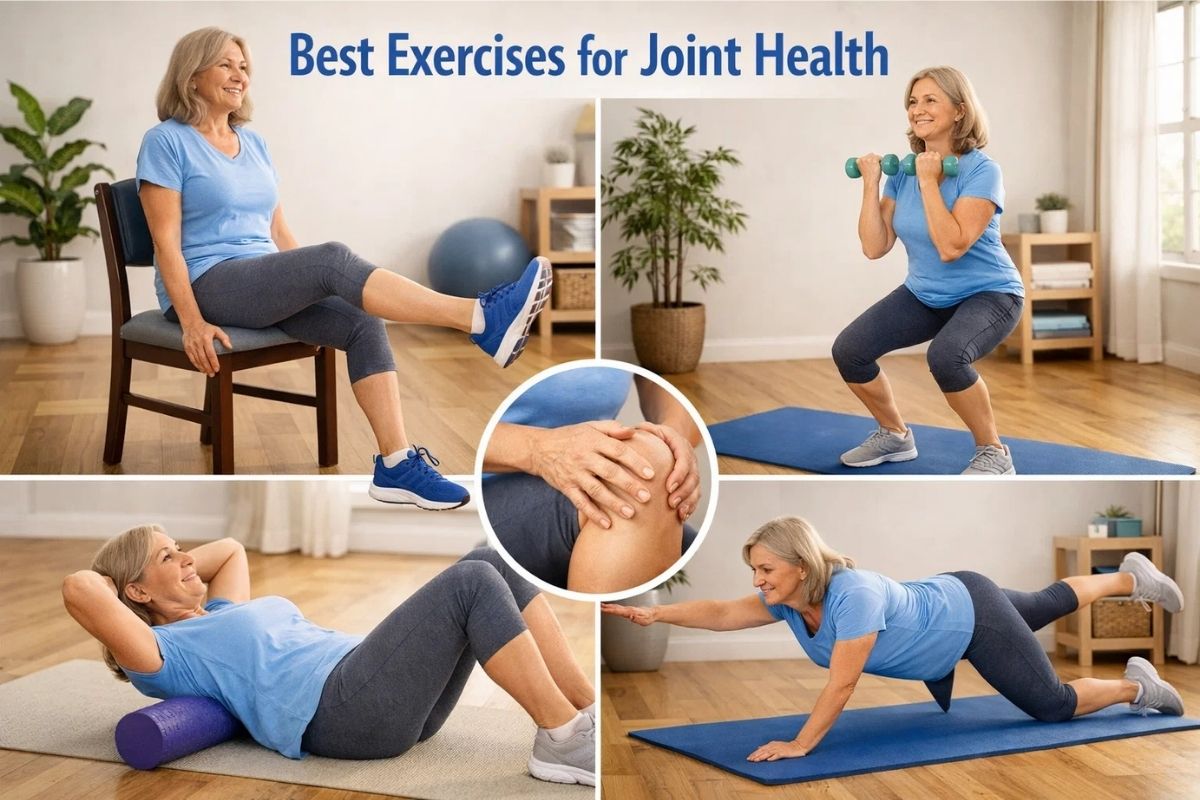
Most people wait until something hurts, then either rest completely or push through pain. Neither works. What does work—backed by decades of research—is the right kind of exercise done regularly. Strategic movement that strengthens what supports your joints, maintains range of motion, and reduces load on damaged structures. This complete guide breaks down exactly what exercises help different joints, why they work, and how to progress safely.
Most people approach joint health backwards. They wait until something hurts, then either rest completely or push through pain hoping it’ll resolve. Neither works particularly well.
What does work—consistently, backed by decades of research and real-world results—is the right kind of exercise done regularly. Not aggressive training that beats up already compromised joints. Not rest that allows muscles to atrophy and joints to stiffen. Strategic movement that strengthens what supports your joints, maintains range of motion, and reduces the load on damaged structures.
I’ve tested these approaches extensively through my own joint issues and watched countless people improve or decline based on whether they moved intelligently or not. The pattern is clear: people who exercise appropriately maintain function and reduce pain. People who don’t progressively decline regardless of other interventions.
This guide breaks down exactly what exercises help different joints, why they work, how to do them correctly, and how to progress safely. Not theory or generic advice, but specific, implementable programs that address the most common joint problems people actually face.
Exercise isn’t optional for joint health. It’s fundamental for reasons that aren’t immediately obvious.
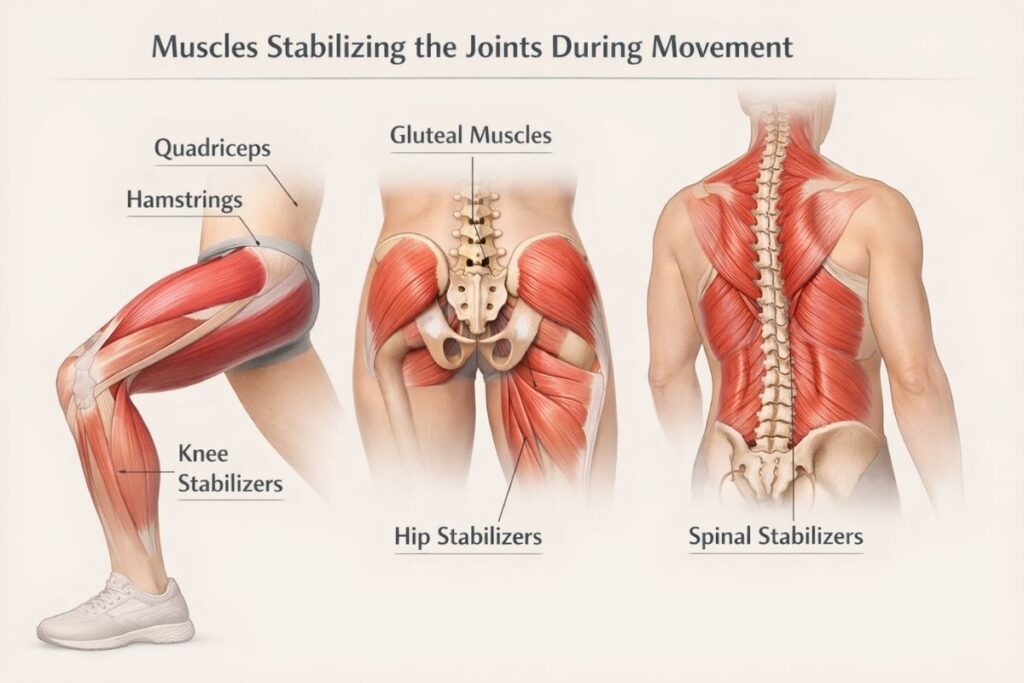
Muscles stabilize joints. Strong quadriceps reduce forces on knee cartilage. Strong glutes keep your hips stable and prevent knee collapse. Core strength protects your spine. When muscles weaken—from disuse, aging, or injury recovery—joints absorb more direct stress and degenerate faster.
This principle aligns closely with what we covered in our guide on Active Aging After 50, where maintaining muscle mass becomes non-negotiable for long-term mobility.
Movement circulates synovial fluid. Your joint cartilage has no blood supply. It gets nutrients through compression and release as you move—like squeezing a sponge. Regular movement keeps this process working. Immobility starves cartilage of nutrients and allows waste products to accumulate.
This mechanism is well documented in orthopedic research, including findings summarized by the Arthritis Foundation on how movement nourishes cartilage and reduces stiffness.
Loading stimulates cartilage maintenance. Moderate loading tells cartilage to maintain and repair itself. Too little loading (bed rest, sedentary life) and cartilage atrophies. Too much (excessive high-impact activity) exceeds repair capacity. The sweet spot is regular moderate loading—which proper exercise provides.
Clinical guidance from Harvard Health Publishing supports this balance, noting that appropriately dosed exercise slows joint degeneration more effectively than rest alone.
Exercise reduces systemic inflammation. Regular movement lowers inflammatory markers throughout your body. This helps all joints, not just the ones you’re directly exercising. This complements dietary strategies discussed in our breakdown of turmeric and inflammation, showing how lifestyle factors work best together rather than in isolation.
Neurological benefits matter. Exercise improves proprioception (body awareness), balance, and coordination. These prevent falls and awkward movements that injure joints.
The research is overwhelming: exercise reduces pain, improves function, and slows progression of most joint conditions. Medication, supplements, and other interventions help, but exercise is the foundation everything else builds on.
Regardless of which joint you’re targeting, certain principles always apply.
Pain during exercise is a signal, not something to push through. Mild discomfort as muscles work is fine. Sharp pain, pain that worsens as you continue, or pain lasting hours after exercise means you’re doing something wrong—too much load, poor form, or inappropriate exercise selection. This distinction is emphasized in physical therapy guidelines published by Physiopedia, a trusted clinical education resource.
Perfect form matters infinitely more than resistance or reps. Five squats with perfect control and alignment beats twenty with sloppy form every time. Poor form reinforces problematic movement patterns and increases injury risk.
Progression must be gradual. Your muscles adapt to training within weeks. Your tendons and ligaments take months. Rushing progression causes tendonitis and injuries. Add reps before weight. Add weight in small increments. Increase one variable at a time.
Consistency trumps intensity. Moderate exercise done regularly produces better long-term results than sporadic intense sessions. This is one of the core takeaways from large population studies reviewed by the World Health Organization on physical activity and musculoskeletal health.
Both strength and mobility matter. Strong muscles with limited range aren’t ideal. Good flexibility without strength to control that range creates instability. You need both.
Bilateral work catches imbalances. Single-leg exercises reveal strength and stability differences between sides. Most people have asymmetries that create uneven joint loading—an issue explored further in our Complete Guide to Joint Conditions
Recovery is when adaptation happens. You don’t get stronger during workouts—you get stronger during recovery. Rest days, adequate sleep, and proper nutrition are part of the training program, not obstacles to it.
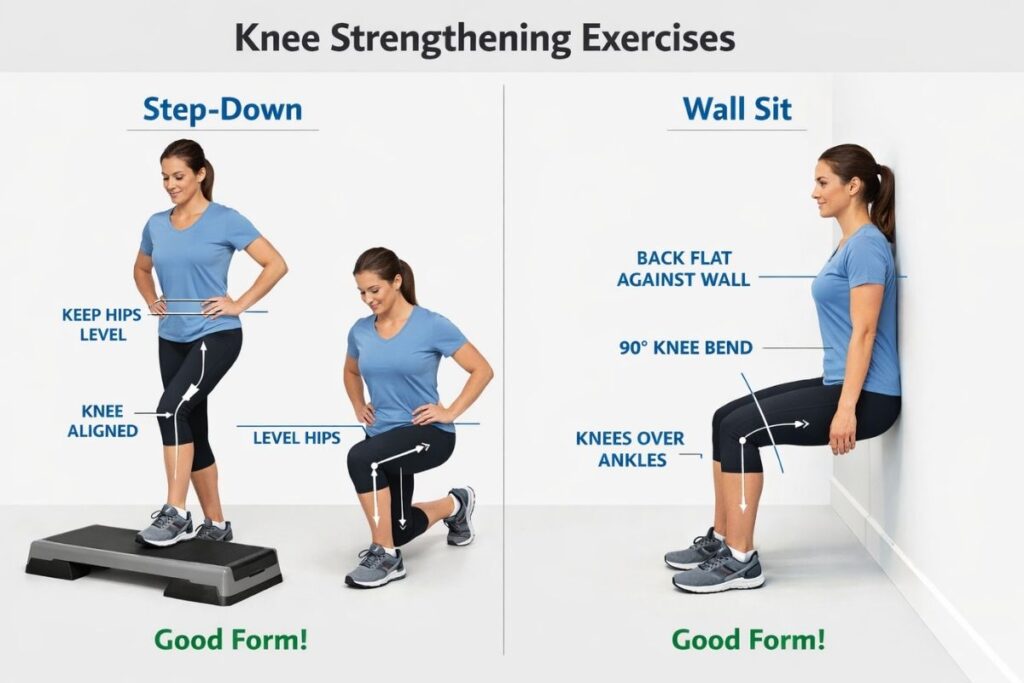
Knee problems are ubiquitous. These exercises address the most common issues and pair well with the movements outlined in 5 Essential Knee Exercises if you want a focused knee-only routine.
What it does: Strengthens the VMO (vastus medialis oblique)—the teardrop muscle above your kneecap crucial for knee stability and proper tracking.
How to do it: Loop resistance band around something sturdy at knee height. Step into band so it’s behind your knee. Walk back until there’s tension. Start with knee slightly bent (20-30 degrees). Straighten knee fully against resistance, hold 2 seconds, return to start.
Dosage: 15-20 reps, 2-3 sets, daily if possible.
Why it works: The VMO is often weak in people with knee pain, especially patellofemoral issues. This isolation exercise activates it specifically. The terminal range (last bit of straightening) is where VMO works hardest.
What it does: Builds eccentric quad strength, trains single-leg stability, mimics real-life demands like stairs.
How to do it: Stand on 4-8 inch step with one leg, other leg hanging off edge. Slowly lower hanging foot toward ground by bending standing knee. Lightly tap heel on ground, push back to start. Keep knee tracking over middle toes, don’t let it cave inward.
Dosage: 10-12 reps per leg, 2-3 sets, 2-3 times weekly.
Why it works: Eccentric strengthening (the lowering phase) is particularly effective for building knee stability. The single-leg requirement prevents compensation and forces each leg to work independently. The pattern directly trains stair descent—where many people struggle.
What it does: Builds isometric quad strength and endurance, minimal knee stress.
How to do it: Back against wall, feet hip-width and 1-2 feet from wall. Slide down until knees at roughly 90 degrees—knees directly over ankles, not pushed forward past toes. Hold position.
Dosage: Start with 20-30 seconds, build to 60+ seconds, 2-3 sets, 2-3 times weekly.
Why it works: Isometric holds build endurance strength critical for knee stability during prolonged standing or walking. The position is self-limiting—you can only hold as long as muscles can manage, reducing injury risk.
What it does: Strengthens quads without bending knee, safe for acute knee pain.
How to do it: Lie on back, one knee bent with foot flat, other leg straight. Tighten quad of straight leg (push back of knee toward floor), lift leg to height of bent knee. Hold 2 seconds, lower slowly.
Dosage: 15-20 reps per leg, 2-3 sets, daily.
Why it works: No knee bending means minimal stress on damaged structures. Still effectively strengthens quads, which is crucial for knee support. Safe even during acute flares.
What it does: Strengthens gluteus medius, improves hip stability, prevents knee valgus (inward collapse).
How to do it: Lie on side, knees bent 45 degrees, feet together. Keeping feet touching, lift top knee toward ceiling. Don’t let hips roll backward—keep them stacked. Lower with control.
Dosage: 15-20 reps per side, 2-3 sets, 3-4 times weekly.
Why it works: Weak glutes, particularly gluteus medius, cause knee valgus during walking, squatting, and stairs. This stresses knee joint improperly and accelerates cartilage wear. Clamshells isolate and strengthen glute med specifically.
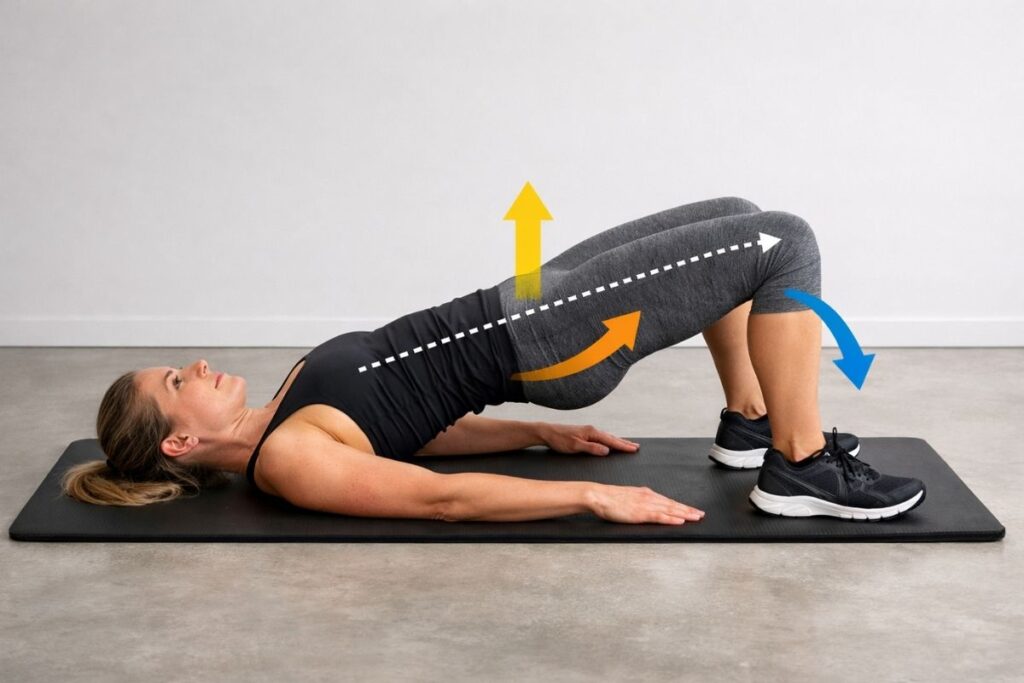
Hip problems often masquerade as back or knee pain. These address common hip issues.
What it does: Strengthens glutes and hamstrings, teaches hip extension pattern, reduces back stress.
How to do it: Lie on back, knees bent, feet flat hip-width apart. Press through heels, lift hips until body forms straight line from knees to shoulders. Squeeze glutes hard at top, hold 2 seconds, lower with control.
Dosage: 15-20 reps, 2-3 sets, 3-4 times weekly. Progress to single-leg when easy.
Why it works: Modern life involves excessive sitting, which weakens glutes and shortens hip flexors. Weak glutes force other structures to compensate, creating hip, knee, and back problems. Bridges rebuild glute strength in a safe, controlled position.
What it does: Lengthens chronically shortened hip flexors from sitting.
How to do it: Kneel on one knee (pad knee if needed), other foot forward in lunge position. Keep torso upright, gently push hips forward until you feel stretch in front of back hip. Hold 30-60 seconds per side.
Dosage: Daily, especially before bed and first thing in morning.
Why it works: Tight hip flexors tilt pelvis forward, increase lumbar curve, and alter hip mechanics. This creates both hip and back pain. Consistent stretching restores length and proper positioning.
What it does: Strengthens hip abductors and external rotators, improves hip stability.
How to do it: Hands and knees position. Keeping knee bent 90 degrees, lift one leg out to side like a dog at a fire hydrant. Keep hips level—don’t rotate pelvis. Hold 2 seconds at top, lower with control.
Dosage: 12-15 reps per side, 2-3 sets, 3 times weekly.
Why it works: Directly strengthens muscles controlling hip stability in multiple planes. These often weaken with age or injury, causing hip pain and altered gait.
What it does: Improves hip internal and external rotation mobility.
How to do it: Sit with one leg bent 90 degrees in front, other leg bent 90 degrees to side. Keeping knees bent, rotate to switch legs to opposite positions. Move slowly and controlled.
Dosage: 10 rotations each direction, daily.
Why it works: Hip rotation stiffens with age and from sitting. Limited rotation forces compensatory movement in knees and back. This drill specifically restores rotational mobility.
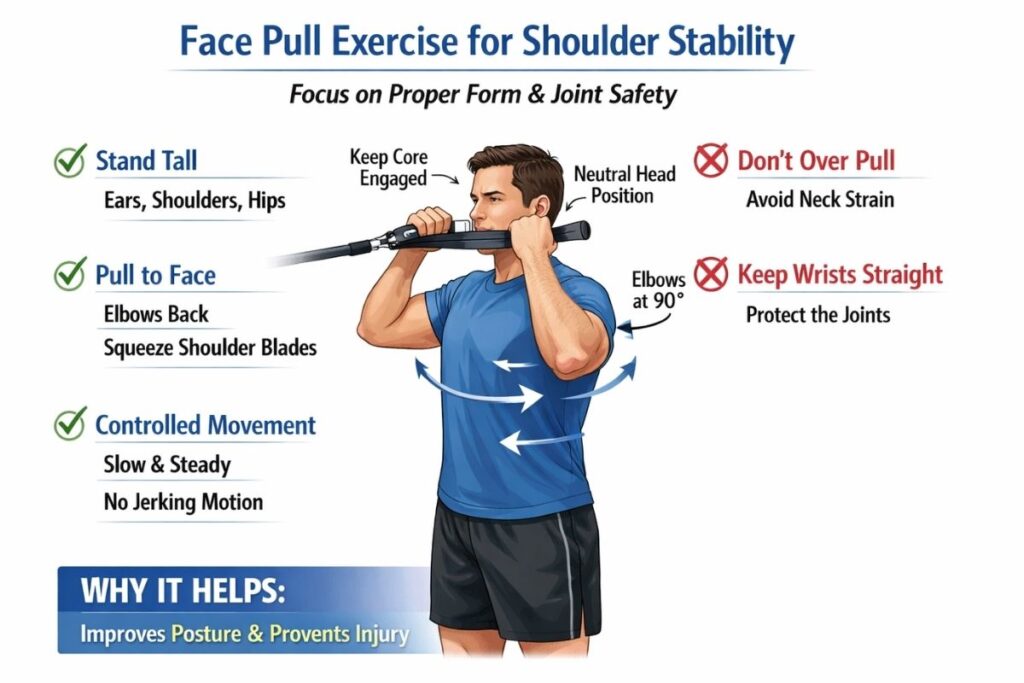
Shoulder problems often stem from muscle imbalances and poor movement patterns.
What it does: Strengthens rotator cuff muscles, particularly infraspinatus and teres minor.
How to do it: Stand with resistance band or cable at elbow height. Hold with elbow at side, bent 90 degrees. Keep elbow pinned to side, rotate forearm away from body against resistance. Return slowly.
Dosage: 12-15 reps per side, 2-3 sets, 3 times weekly.
Why it works: External rotators are usually weak compared to internal rotators in modern populations. This imbalance contributes to impingement and rotator cuff problems. Balancing these forces protects the shoulder.
What it does: Improves scapular control and overhead mobility.
How to do it: Stand with back against wall, arms at sides. Slowly slide arms up wall keeping elbows, backs of hands, and back against wall. Go as high as possible while maintaining contact, then slide back down.
Dosage: 10-12 reps, 2-3 sets, daily.
Why it works: Proper shoulder movement requires coordinated scapular motion. Wall slides retrain this pattern while improving overhead range safely.
What it does: Strengthens upper back and rear deltoids, counters forward shoulder posture.
How to do it: Using resistance band or cable at face height, pull handles toward face separating hands as you pull. Squeeze shoulder blades together. Return with control.
Dosage: 15-20 reps, 2-3 sets, 3 times weekly.
Why it works: Modern posture emphasizes forward shoulder position from driving, computer work, phone use. Face pulls strengthen the posterior chain that pulls shoulders back into proper alignment.
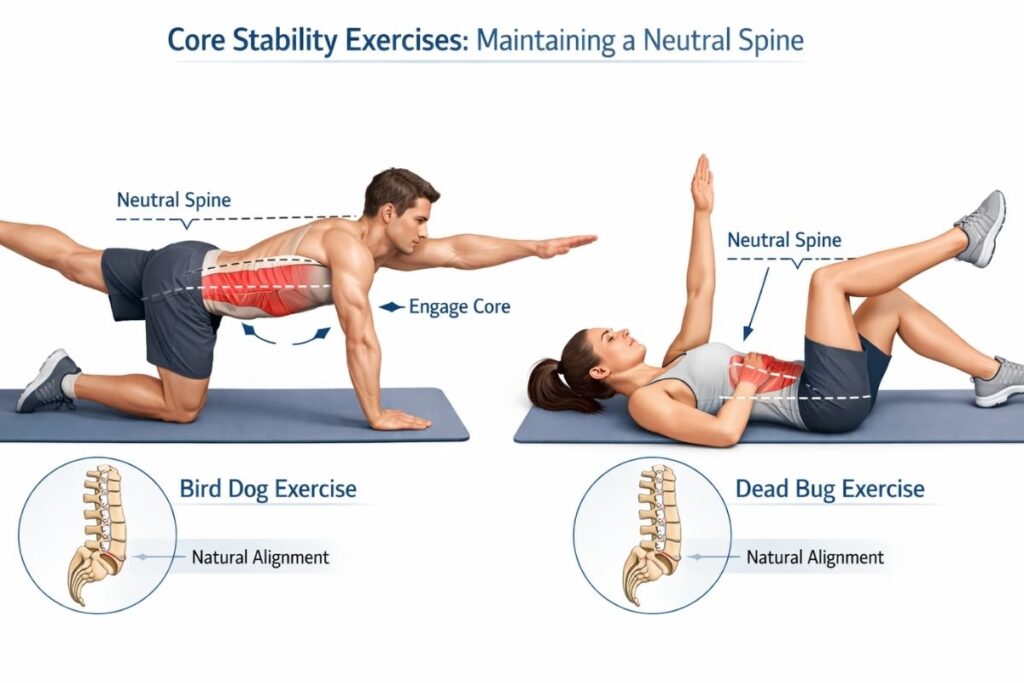
Back pain often relates to poor stability and mobility patterns.
What it does: Builds core stability and spine control.
How to do it: Hands and knees position. Extend one arm forward and opposite leg back simultaneously. Keep hips level and spine neutral—don’t let back arch or twist. Hold 5-10 seconds, return, switch sides.
Dosage: 8-10 reps per side, 2-3 sets, 3-4 times weekly.
Why it works: Trains coordinated core stability—the foundation of safe, pain-free movement. The opposite limb pattern mimics demands of walking and daily activities.
What it does: Improves spinal mobility through flexion and extension.
How to do it: Hands and knees position. Arch back while lifting head and tailbone (cow). Then round back while tucking chin and tailbone (cat). Move slowly between positions.
Dosage: 10-15 cycles, daily, especially morning.
Why it works: Spinal mobility naturally decreases with age and from static postures. Cat-cow gently restores flexion-extension range while warming spinal tissues.
What it does: Builds anti-extension core strength, protects lower back.
How to do it: Lie on back, knees bent 90 degrees, shins parallel to floor. Press low back into floor. Slowly extend one leg while reaching opposite arm overhead. Return, switch sides. Keep low back pressed to floor throughout.
Dosage: 8-10 reps per side, 2-3 sets, 3 times weekly.
Why it works: Most back pain involves inability to maintain neutral spine during movement. Dead bugs specifically train this control in a safe position.
What it does: Extends spine, can centralize disc-related pain.
How to do it: Lie face-down. Place hands under shoulders. Press upper body up, keeping hips on ground. Hold 5-10 seconds, lower. Only go as high as comfortable.
Dosage: 10 reps, multiple times daily if helpful for disc issues.
Why it works: Extension-based back pain often responds to extension exercises (seems counterintuitive but works through McKenzie principles). Can push disc material anteriorly, reducing nerve pressure.
Often overlooked but critical for maintaining function.
What it does: Strengthens finger extensors, balances grip-dominant patterns.
How to do it: Place rubber band around fingers and thumb. Spread fingers and thumb apart against resistance. Hold 2 seconds, release.
Dosage: 10-15 reps, 2-3 sets, daily.
Why it works: Modern life involves constant gripping—phones, keyboards, tools. Extensors become weak relative to flexors. This imbalance contributes to hand and wrist pain.
What it does: Maintains wrist flexibility, prevents tendonitis.
How to do it:
Dosage: 30 seconds each position, multiple times daily.
Why it works: Keyboard work and repetitive gripping tighten these muscles. Regular stretching prevents tendonitis and maintains functional range.
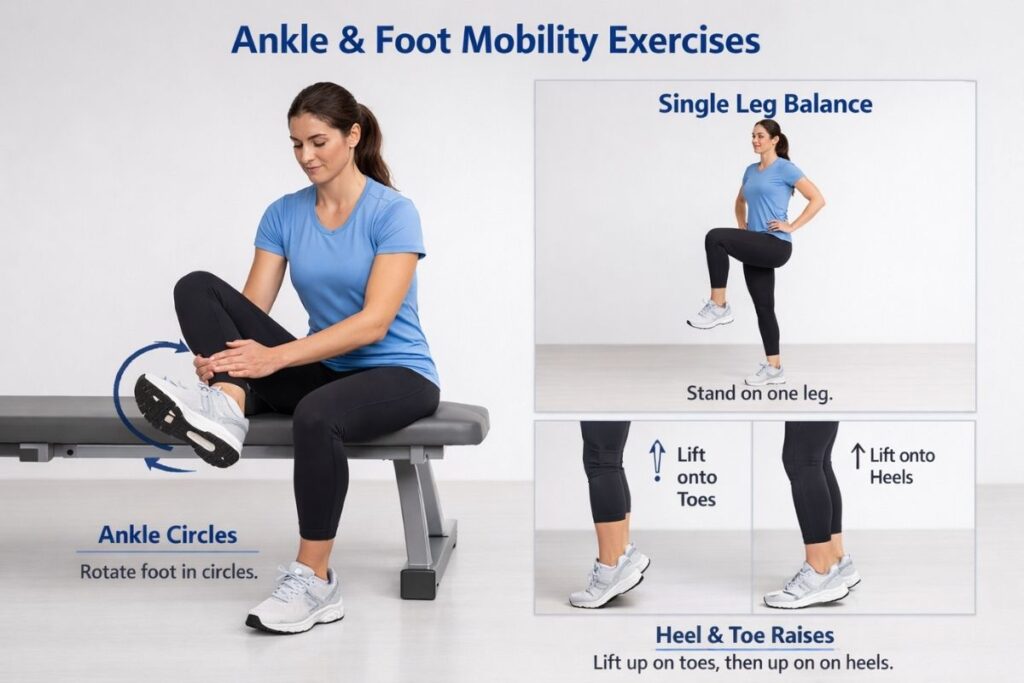
Foundation of all movement—often neglected.
What it does: Restores ankle mobility in all directions.
How to do it: Seated with leg extended, trace alphabet with toes (moving from ankle). Use full, exaggerated movements.
Dosage: Complete alphabet 1-2 times per ankle, daily.
Why it works: Ankles naturally stiffen from shoe-wearing and limited movement variety. This drill moves them through all planes, maintaining full mobility.
What it does: Strengthens ankle stabilizers, improves proprioception.
How to do it: Stand on one leg. Hold 30-60 seconds without wobbling. Progress to eyes closed, unstable surface, or adding arm movements.
Dosage: Multiple times per leg, daily.
Why it works: Ankle stability prevents sprains and improves walking efficiency. Balance training also reduces fall risk—critical for older adults.
What it does: Strengthens intrinsic foot muscles.
How to do it: Spread toes apart as wide as possible, hold 5 seconds. Then grip toes down as if grabbing something, hold 5 seconds. Alternate.
Dosage: 10 reps, 2-3 sets, daily.
Why it works: Shoes weaken foot muscles. Strong feet provide better foundation for all movement and reduce injury risk up the kinetic chain.
Individual exercises matter, but programming determines results.
If you’re managing a diagnosed condition like osteoarthritis, rheumatoid arthritis, or gout, it’s worth pairing this guide with our Complete Guide to Joint Conditions to understand how disease-specific factors influence exercise selection.
Start with foundation: Walking daily (30-60 minutes), basic mobility work (10-15 minutes), bodyweight strength basics. Build from here.
Address your specific issues: Knee pain gets knee-focused work, but also hip and ankle work since everything connects. Back pain needs core stability plus mobility.
Balance strength and mobility: Each session should include both strengthening and stretching/mobility work. Don’t just lift; don’t just stretch.
Weekly structure example:
Progress conservatively: Master current level before advancing. Add reps before resistance. Add one variable at a time.
Listen to feedback: Pain during exercise means modify. Soreness 24-48 hours after is normal. Pain lasting longer or getting worse means you overdid it.
Track what works: Note exercises, sets, reps, how you feel after. Data reveals patterns about what helps and what aggravates.
Inconsistency. Sporadic effort produces minimal results. Regular moderate work beats occasional heroic sessions.
Ignoring pain signals. Pain is information, not weakness. Pushing through builds injury, not resilience.
Skipping warm-up. Older joints need longer warm-ups. Five minutes of gentle movement before exercise prevents injury.
Excessive volume. More isn’t always better. Quality and recovery matter more than quantity.
Neglecting unilateral work. Bilateral exercises hide asymmetries. Single-leg and single-arm work reveals and addresses imbalances.
Poor form for higher reps/weight. Perfect form with moderate challenge beats sloppy form with heavy weight.
All strength, no mobility. Or vice versa. Balance is key.
Exercise for joint health isn’t complicated. It requires understanding what your joints need, doing appropriate exercises consistently, progressing intelligently, and listening to feedback. Do that, and your joints will reward you with maintained function and reduced pain.
Note: This is educational information, not medical advice or personalized exercise prescription. Work with qualified physical therapists or trainers for individualized programming, especially if you have significant joint problems or are recovering from injury.